
Trauma-Sensitive Yoga
A practice rooted in choice, agency, and relationship with the body
Yoga can be a place where we learn to listen to the body rather than override it.
My trauma-sensitive approach invites students to explore movement, breath, stillness, and rest without pressure to perform, push past their limits, or experience the practice in any particular way.
Rather than asking, “Am I doing this correctly?” students are encouraged to notice:
What am I experiencing?
What choices are available to me?
What feels supportive today?
Whether I am teaching a public studio class, a private group, an online practice, or a workshop for trauma survivors, I create spaces grounded in autonomy, curiosity, and respect for each person’s lived experience.
Available for in-person offerings throughout the Seattle area and for online classes, workshops, and private groups.
Trauma can affect the way we experience our bodies, our choices, our boundaries, our sense of self, and even our ability to know what we want.
A yoga class cannot resolve trauma, nor is yoga a replacement for therapy or mental health care. But thoughtfully facilitated movement can offer opportunities to practice something many people have had too little access to:
Choice.
Students are invited to decide whether to participate, pause, change direction, rest, or try something different. No particular posture, pace, sensation, or emotional outcome is treated as the goal.
The practice becomes less about shaping the body and more about developing a relationship with it.
In my classes, you can expect:
Invitational rather than commanding language
Multiple movement and rest options
No requirement to disclose a trauma history
Respect for personal space and physical boundaries
Opportunities to pause or change your mind
An emphasis on internal sensation rather than external appearance
No assumption that a particular shape or experience is right for everyone
A grounded environment without forced positivity or emotional pressure
You remain the decision-maker throughout your practice.
Yoga That Gives The Body A Voice
What Makes Trauma-Sensitive Yoga Different?
Trauma-sensitive yoga is a specialized, evidence-based mind-body practice adapted from Hatha yoga to help survivors of complex trauma and PTSD reclaim a sense of physical safety, agency, and body awareness.
“In the largest systematic review of yoga-based PTSD interventions ever conducted — 988 studies evaluated — Trauma Center Trauma-Sensitive Yoga (TCTSY) ranked alongside Cognitive Processing Therapy (CPT) as one of the top two interventions for PTSD. CPT is currently the gold standard in trauma treatment.” (2024, Campbell et al., Journal of Traumatic Stress)
Ways to Practice With Me
-
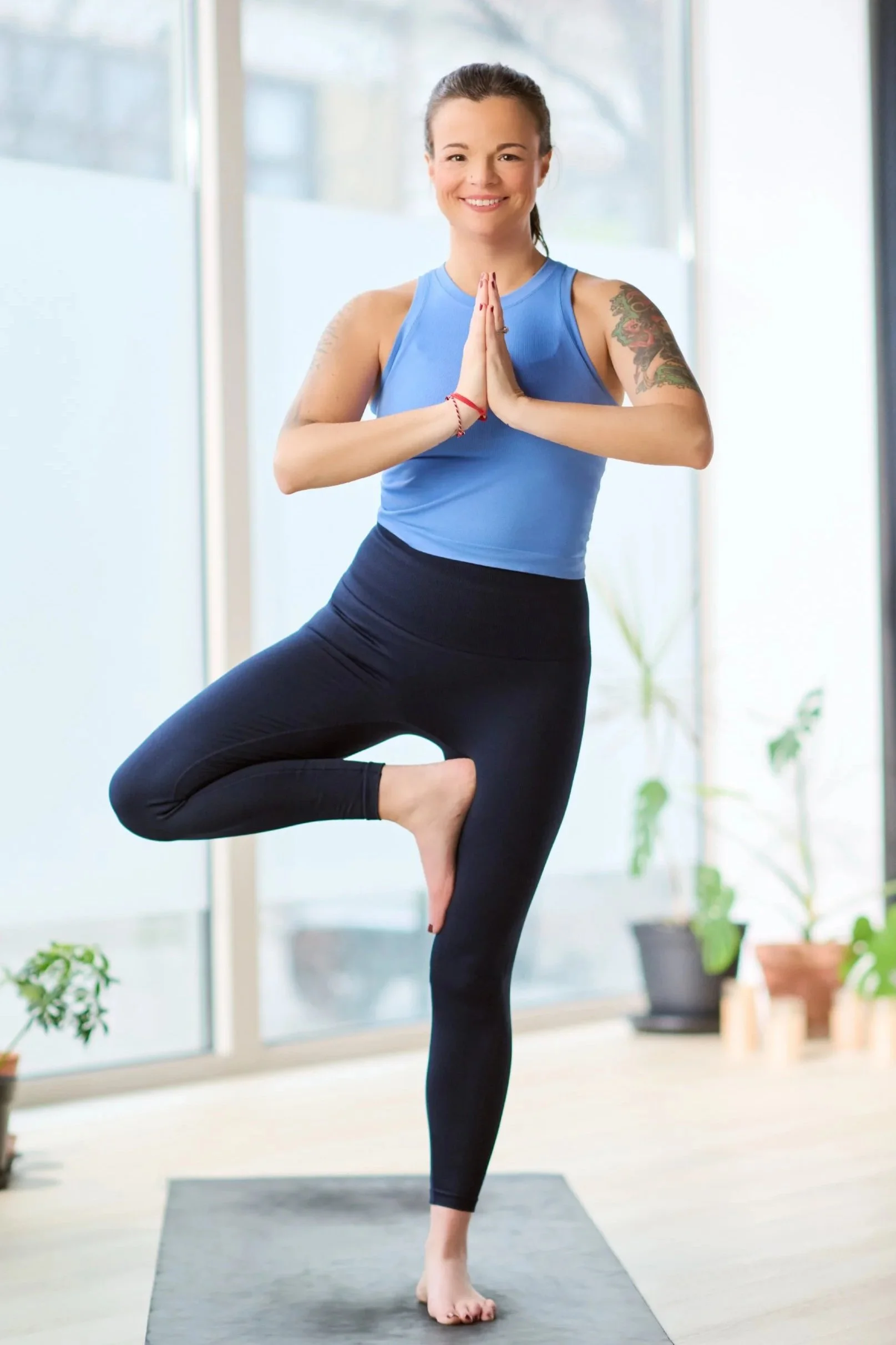
I teach slow flow and vinyasa yoga in the greater Seattle area, bringing a trauma-sensitive lens to public classes without requiring students to identify themselves as trauma survivors.
These practices combine intentional movement, breath, reflection, and rest. Students are offered meaningful choices throughout class and are encouraged to build trust in their own preferences rather than relying solely on the teacher to determine what their bodies need.
Best for: Students seeking a thoughtful, embodied yoga practice within a public studio setting.
-
Private sessions can offer greater flexibility for individuals or small groups who want a quieter and more personalized environment.
Sessions may include gentle movement, slow flow, breath awareness, meditation, grounding practices, and guided rest. The structure is shaped collaboratively around the needs and preferences of the individual or group.
Private yoga may be offered:
One-to-one
For couples or small groups
For survivor communities
As part of a retreat or gathering
For organizations supporting staff or clients
In person in the Seattle area
Online from anywhere
No previous yoga experience is required.
-
Online practice allows students to participate from their own space, where they may have greater control over privacy, sensory input, movement choices, and the surrounding environment.
I offer virtual classes and custom online practices for individuals, private groups, community organizations, and geographically dispersed teams.
Online sessions can be offered as:
A single class
A short series
A recurring group practice
Part of a workshop or educational program
A private session designed around individual preferences
Participants are always welcome to adjust their camera, position themselves in whatever way feels most supportive, and participate without being visually observed.
-
I create trauma-sensitive yoga and embodiment workshops and retreats centered around choice, boundaries, agency, self-trust, joy, and reconnecting with the body after survival.
These experiences may combine:
Accessible movement
Breath practices
Guided meditation
Nervous-system education
Reflection and journaling
Creative exploration
Opportunities to practice preference, boundaries, and choice
Workshops and retreats can be adapted for yoga studios, survivor communities, nonprofits, wellness organizations, educators, and other groups seeking a grounded and respectful approach to embodiment.
-
Trauma-sensitive teaching is not a separate style of yoga. It is a way of understanding how language, power, choice, consent, pacing, physical adjustments, and the class environment can shape a student’s experience.
I offer guest instruction for yoga teacher trainings that helps emerging and experienced teachers develop a more thoughtful, choice-centered approach to facilitating movement.
Sessions can explore:
How trauma may affect a student’s experience of yoga
The difference between trauma-informed and trauma-sensitive teaching
Invitational language that supports choice without becoming vague
Consent, physical touch, and hands-on adjustments
Power dynamics within the teacher-student relationship
Creating meaningful options without overwhelming students
Supporting agency while maintaining a clear class structure
Responding when a student becomes activated or disengaged
Common teaching practices that may unintentionally remove choice
Applying trauma-sensitive principles across vinyasa, slow flow, restorative, and other class styles
Trainings are experiential as well as educational. Participants may be invited to notice how different language and teaching choices feel in their own bodies, practice adapting familiar cues, and explore how trauma-sensitive principles can be integrated without turning a public yoga class into therapy.
Sessions can be customized to complement your existing curriculum and are available as a single workshop, an extended module, or a multi-session training.
Available in person for yoga teacher trainings throughout the Seattle area and virtually for programs anywhere.
Frequently Asked Questions
-
No. Trauma-sensitive teaching benefits many students, including people who simply appreciate having choices, clear boundaries, and autonomy within a yoga class.
You never need to identify as a trauma survivor or disclose anything about your history.
-
No. Yoga classes and workshops are educational and experiential offerings, not therapy, medical treatment, crisis care, or a replacement for support from a licensed healthcare professional.
-
No. Beginners are welcome. Options are offered throughout the practice, and no particular level of flexibility, strength, fitness, or familiarity with yoga is required.
-
My default approach is not to use hands-on adjustments. Any physical contact would be discussed clearly and would require active, specific consent. Declining touch never requires an explanation. You can always change your mind at any point in class.
-
You are always welcome to pause, rest, change a movement, leave a shape, or choose not to participate. You do not need permission to respond to your own body.
-
No. Trauma-sensitive describes how a class is facilitated, not necessarily its intensity. I teach both slow flow and vinyasa practices while preserving choice, autonomy, and respect for individual experience
Let’s Connect
Whether you are looking for a public class, a private session, an online experience, or a trauma-sensitive offering for your studio or community, I would be glad to learn more about what you need.
For students: Use the form to inquire about an upcoming class or about private and online options.
For studios and organizations: Use the form to ask about workshops, retreats, or custom programming.